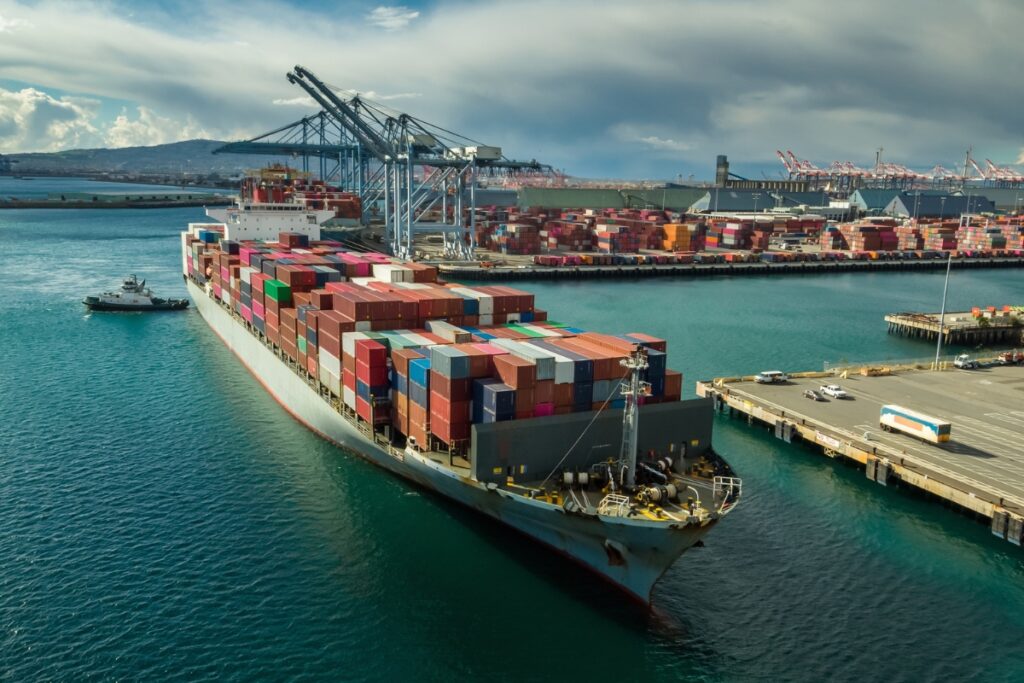
International shipments rarely travel a single, simple route. From collection and packing to shipping, customs, temporary storage and final delivery, every stage plays its part in getting customers’ belongings safely to their destination. But does your marine insurance reflect the whole journey?
When a customer entrusts an international mover with their belongings, the journey between countries can involve far more than a shipping container and a vessel. Goods may pass through several locations, transport providers and handling teams before they reach their final destination.
For the moving company responsible for making it all happen, coordinating these stages is part of everyday business. But there’s another important consideration: making sure the insurance arrangements reflect the journey the goods will actually take.
Marine insurance can play an important role in helping your business manage the risks of transporting customers’ belongings internationally. It’s worth looking beyond the sea crossing itself to consider the wider journey, how the goods are handled and what insurance has been arranged.
An international move is more than a sea journey
Every international shipment has its own requirements. A straightforward door-to-door move might involve collection from the customer’s home, packing, road transport to a port, an ocean crossing, customs clearance and final delivery overseas.
Other shipments may involve additional stages, such as consolidation with other consignments, transfers between transport providers or temporary storage while arrangements are finalised.
Each stage forms part of the wider operation, but each one also raises questions about how the goods are insured along the way. Does the insurance reflect the transport methods being used? Are any periods of storage accounted for? What happens if the planned arrangements change?
These are practical questions to ask, not necessarily signs that something is wrong. They’re part of understanding whether your insurance arrangements reflect the shipment and the services you provide.
For international movers, the principle is straightforward: understand what’s been arranged, what it applies to and whether it reflects the journey ahead.
When plans change, insurance needs to keep up
International logistics rarely operates in a vacuum. Schedules can change, connections can be missed, customs clearance can take longer than expected, and delivery arrangements may need to be revised.
Sometimes, goods need to remain in storage for longer than originally planned. In other cases, a shipment may follow a different route or involve a change in transport arrangements.
Operationally, experienced international movers are used to adapting when circumstances change. The insurance implications, however, shouldn’t be overlooked.
A policy will have its own terms, conditions, limits and requirements. These determine how the insured journey is defined and what applies when circumstances differ from the original plan. A change in arrangements doesn’t automatically mean insurance is invalid, but it may be worth checking whether the revised circumstances remain within the agreed terms.
Industry guidance can help explain the operational context. FIDI’s Professional Cooperation Guidelines, for example, address different stages of the international moving process, including origin and destination services, storage, communication and claims handling. The guidelines provide a useful reference for industry practice, although the insurance position itself depends on the policy in place.
If a shipment’s route, handling arrangements or storage requirements change significantly, speaking to your insurance broker can help establish whether anything needs to be reviewed.
It’s much easier to clarify the position while a shipment is in progress than to discover uncertainty when a claim arises.
Don’t assume someone else’s liability is enough
International moves often involve several businesses, each with a different role in getting goods to their destination. There may be an origin agent, a shipping line, a road haulier, a destination agent and a warehouse operator, for example.
Each party may have responsibilities for the goods while they’re in its care. But the liability a third party accepts isn’t necessarily the same as insurance for the full value of your customer’s belongings.
Carrier and freight-forwarder liability can be affected by contractual terms, applicable conventions, the circumstances of a loss and the limits that apply to the party concerned. It shouldn’t automatically be assumed that a third party will compensate the customer for lost or damaged goods.
For international movers, understanding this distinction helps clarify where responsibility sits, what arrangements are already in place and whether appropriate insurance has been arranged for your customer’s goods.
It also reinforces the value of clear communication with your customers. Knowing what has been insured, on what basis and subject to which terms helps set realistic expectations before the move begins.
Does your marine insurance reflect how your business works?
No two international moving businesses operate in exactly the same way. The routes you use, the partners you work with, the types of goods you transport and the storage arrangements you rely on can all differ.
That’s why reviewing your marine insurance shouldn’t simply be a case of renewing last year’s arrangements and assuming they’re still suitable.
Instead, it’s worth stepping back and considering how your business operates today.
Your typical journeys: Do your insurance arrangements reflect the routes, transport methods and stages involved in your international moves?
Your handling arrangements: Are the relevant activities, handovers and any periods of storage accounted for under the agreed terms?
Your business relationships: Do you understand the responsibilities of the different parties involved and how their arrangements interact with your own?
Your customers’ expectations: Are you clear about what insurance has been arranged for their belongings and what the relevant terms mean?
Changes to your operation: Have new routes, suppliers, services or processes created anything that needs to be reviewed with your broker?
These questions offer a useful starting point for a conversation with your insurance broker. The aim isn’t to assume that gaps exist, but to establish whether your current arrangements continue to reflect the realities of your business.
Make insurance part of the planning
Marine insurance is most valuable when it’s considered alongside the operational planning that makes an international move possible.
Understanding the journey, the goods being transported and the arrangements involved helps you ask the right questions, identify where clarification is needed and make informed decisions about your insurance.
That doesn’t remove every risk from international moving. But it can help reduce uncertainty and give you greater confidence that your insurance arrangements have been considered in the context of how your business actually works.
At Reason Global, we understand that international moving involves much more than getting goods from one country to another. Every shipment has its own requirements, and the businesses coordinating them need insurance that reflects the realities of their operations.
As specialist insurance brokers with expertise in international moving and marine insurance, we work side-by-side with clients to understand their requirements, consider the risks involved and help them make informed decisions about their insurance.
Because a shipment’s journey doesn’t end at the port. And neither should the thinking behind its insurance.
Interested to know more?
At Reason Global, our brokers and claims handlers take pride in assisting our clients on any claims they may receive to ensure the process is as painless as possible. Contact us today to learn more about ensuring the right cover is in place for your company.