
The cost is obvious; the value less so. It would be typical of an insurance broker to say that insurance is good for you, and to encourage you not to think of it as a necessary evil.
The problem is that insurance can feel exactly like that: something you begrudge paying for but feel you have no option but to buy.
Most removals and self storage businesses do not wake up excited to review their insurance. It can feel like another annual admin job: forms to complete, information to provide and values to update, claims history to explain and another bill to pay.
That frustration is understandable because the premium is visible, the renewal information needs to be gathered every year, and if there has not been a claim, it can be easy to question what value has actually been received from the outlay.
Seen only through the lens of cost, it is easy to miss the bigger picture as the real value is often the certainty it gives a business before anything has even gone wrong.
The question is whether that mindset needs to change, and whether insurance should be seen as something that helps a business not just recover from a loss but operate and grow.
What happens when the risk stays with you?
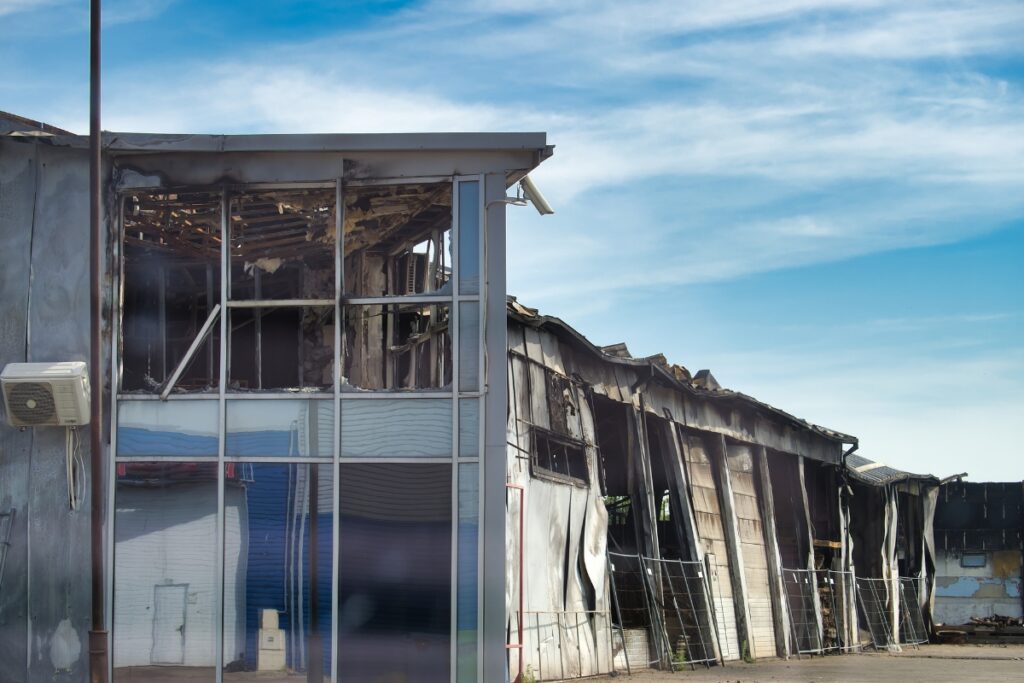
Imagine a world without insurance, where you had to cater for major losses yourself. Apart from the mental stress, imagine the financial stress too. If you had to constantly set aside funds to rebuild your storage facility after a fire, replace a stolen vehicle, or deal with the knock-on loss of revenue, how much working capital would be left to run and grow the business?
If a risk is not insured, it has not disappeared. It simply sits with the business. The question then becomes whether the business can realistically afford to carry that risk itself, or whether it makes more sense to pass some of that risk over to an insurer.
Looked at this way, insurance is not just another annual cost. It is one of the tools that enables businesses to thrive and survive, because it can help respond to certain insured losses that many businesses would struggle to absorb alone.
That is why the value of insurance is not always obvious when everything is running smoothly. It tends to become much clearer when a business considers a loss it could not comfortably absorb on its own. Remembering the famous JF Kennedy adage “The time to repair the roof is when the sun is shining” it’s too late to properly review your insurance programme after the big loss has landed.
The real cost of disruption
When something goes wrong, the cost of the incident is rarely the only problem. For operators, the real challenge is often what follows: rearranging jobs, speaking to customers, gathering evidence, managing staff time, protecting the business’s reputation and keeping cashflow under control while day to day operations still must continue.
If you run a fleet, one vehicle being unavailable at the wrong time can affect crew planning, job capacity, customer commitments and the ability to keep work moving during busy periods.
For storage operators, any incident affecting a site can quickly become more than a property issue. From day one it can involve customer communication, claims handling, operational decisions and a test of how quickly the business can regain control.
When a business is dealing with a major loss, owners and managers are also trying to look after staff, speak to customers, protect their reputation and make decisions quickly. Insurance cannot remove all of that pressure, but the right cover and claims support can help reduce the financial shock and give the business a clearer route to recovery.

Insurance is built into everyday business life
That is why insurance should not feel separate from day-to-day operations. It sits in the background of ordinary business life: vehicles on the road, customer goods in transit or storage, warehouses, forklifts, employees, members of the public, cyber risks, contractual liabilities and loss of income following damage.
For operators, these risks are not theoretical. Crews are in customers’ homes, vehicles are on the road, goods are being handled, warehouses are occupied, customers visit storage sites and staff are working with equipment every day. Loss exposures constantly lurk in the background of the normal working day.
A platform for confidence and growth
By freeing up funds and transferring risk, insurance can give businesses more confidence and stability to invest in growth, whether that means international work, a new site, expanded storage capacity, or another part of the business. It can also support tendering for contracts where you may be expected to evidence that you hold the required insurance policies.
Customer confidence matters too. In this sector, customers are often handing over possessions that carry both financial and emotional value. That might be household contents during a move, tools and stock in a storage unit, business records or archives. Whatever the goods are, the customer will expect clear answers if something goes wrong.
Clear insurance arrangements, sensible limits and properly explained terms can all help build trust by showing that the business has thought seriously about risk, responsibility and what would happen if something went wrong.
At its simplest, insurance works because many businesses contribute premiums so that the few who suffer serious losses can be supported. That shared approach allows individual businesses to plan with more certainty than they could if they had to carry every major risk alone.

Prevention matters as much as protection
As well as paying claims, insurers can be proactive in helping prevent them. Even when insurance cover responds to a claim, the process can be time consuming and disruptive, pulling management resources away from the day job.
It is in the interests of both the business and the insurer to prevent claims occurring in the first place. As part of their risk assessment, insurers may look at how the business is managed and identify likely vulnerabilities, for example by surveying storage facilities and operations, reviewing driver training, or identifying the reasons behind past losses.
Good insurance discussions can reveal practical improvements, from driver training and vehicle security through to fire detection, storage layouts, electrical inspections, flood resilience and claims trend reviews. These measures may reduce the chance or severity of future losses, support better insurer conversations and strengthen the reputation of the business.
Insurance is not only about buildings, vehicles and stock. It is also about people: employees lifting, driving, loading, unloading, working around vehicles, meeting customers and operating in premises where accidents can happen. Employers’ liability may be a legal requirement, but good risk management around people is also good business practice.
The real question: what risk are you carrying?
Ultimately, insurance should not just be viewed as an annual transaction or a line on the profit and loss account. It is part of how a business decides what risk it is comfortable carrying itself, and what risk it would rather transfer.
Insurance is not exciting, and it is not perfect, but it does force a useful question: which risks can the business afford to carry itself, and which ones could cause real pain if left uninsured? When arranged properly, it can help support resilience, cashflow, customer confidence and the ability to focus on growth.
A practical next step
I am not expecting one article to make anyone suddenly love insurance. But if it has shifted the way you think about it slightly or prompted you to ask what risks your business is still carrying, then this is a step in the right direction.
If you are unsure whether your current insurance programme reflects the risks your business is actually carrying, it may be worth reviewing it ahead of renewal rather than waiting until something goes wrong.
A useful starting point is to ask a simple question: if this happened tomorrow, would we know how it would affect our people, customers, cashflow and ability to keep trading?
If you would like to sense-check your current arrangements or talk through where your business may be carrying more risk than intended, we would be happy to help.
Download a copy of this article here:
Interested to know more?
At Reason Global, our brokers and claims handlers take pride in assisting our clients on any claims they may receive to ensure the process is as painless as possible. Contact us today to learn more about ensuring the right cover is in place for your company.