
In simple terms, Business Interruption insurance is there to help protect the income of the business if an insured event, such as a serious fire or flood, stops or restricts normal trading. Property insurance may deal with the physical damage, but this cover is about the financial impact that follows.
It can be one of the trickier covers to think about because it asks a simple but uncomfortable question: if something serious happened tomorrow, how would your business keep going?
Below is a practical guide on how to approach this cover and some key points to think about. A useful mindset is to imagine a worst-case scenario following a major event and work through the points below to make sure you are comfortable with your position. For example, what would happen if a warehouse caught fire?
There are a range of considerations that can sit within this area of insurance, and it can cater for different types of events. Depending on a business’s appetite for risk transfer you can select the cover and premium that suits the business. The important point is to understand what options are available and make an informed decision.
Insurance can be confusing at the best of times. At renewal, it can also be easy to see it as an additional expense rather than a core part of protecting the business. This is a good example of that, because it involves picturing a worst-case scenario, breaking down how your business actually works and forecasting what recovery might look like. That is not easy to do while juggling day-to-day operations.
However, it is worth taking the time to lean into this difficulty. The stakes are high, and if the worst does happen, a serious loss can leave your business drastically exposed. The right cover can be a major factor in whether a business recovers properly after a serious loss. Underinsurance remains a common issue for UK businesses, particularly where sums insured, limits or recovery periods have not been reviewed carefully.
Business Interruption usually needs insured damage first
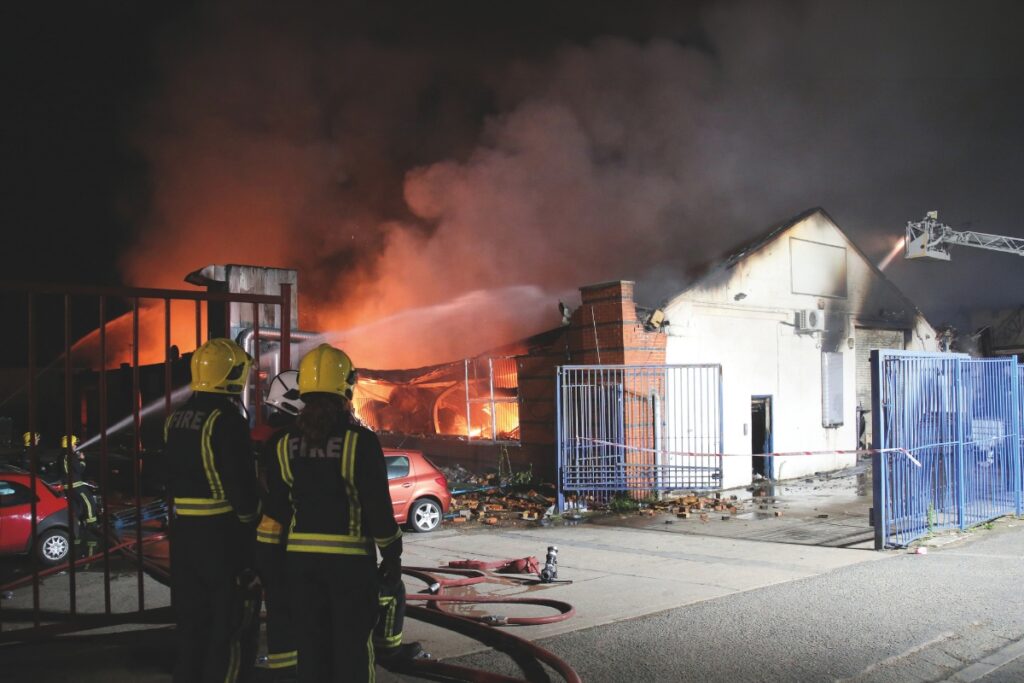
A key point with most Business Interruption policies is the material damage proviso. In plain English, this means the Business Interruption cover will usually only respond where there has first been insured physical damage to property, caused by an insured peril under the material damage section of the policy. An insured peril means an event covered by the policy, for example fire, flood, storm or another insured cause of damage.
For example, if a warehouse fire is covered under the property damage section, the related loss of income may then be considered under the Business Interruption section, subject to the policy wording, limits and conditions. If the underlying event is not insured under the material damage section, the Business Interruption section may not respond.
It is also worth noting that the physical damage does not always have to be insured under the same policy as the Business Interruption cover. For example, where a remover rents the building and the building is insured under the landlord’s policy, that may still satisfy the material damage proviso, subject to the wording, limits and conditions that apply.
Choose the right basis: gross profit or gross revenue
Business Interruption cover is commonly arranged on either a gross profit or gross revenue basis. Which is best will depend on the business and how easy it is to calculate the true loss following an insured event.
In short, the question is whether you want to insure the income you would lose, or the profit left after costs that genuinely stop.
A gross profit basis allows certain “uninsured working expenses” to be deducted, such as material costs or fuel costs that genuinely stop when the business stops. The result is the insurable gross profit but it requires careful calculation. If expenses are incorrectly treated as stopping after a loss, the business could be left underinsured.
Many removal companies would try to continue operating in some capacity after a loss. For example, following a warehouse fire, the business may still be able to carry out standard A to B removals because those jobs are not directly affected. In that scenario, fewer costs may stop than first expected. As a service-based business rather than a manufacturing one, many key costs, such as rent, salaries, finance costs and utilities, may continue even if normal trading is restricted. For some businesses, a gross revenue basis can therefore be simpler to calculate, easier to explain and may reduce the risk of underinsurance where costs are deducted that would not actually stop after a loss.

Work out which parts of the business could stop and what could continue
As mentioned above, removals is a varied business. Revenue and profit can come from different areas, such as the sale of packing materials, A to B removals, storage, and movements in and out of a warehouse. After a major event, would all parts of the business stop, or could certain areas continue to operate?
If the business could continue to provide A to B removals, and it is mainly the storage element you need to protect, it is important to also consider any related movements. This could include movements into storage, out of storage, or temporary storage arrangements that may be affected.
Choose a realistic recovery period
The indemnity period is the maximum length of time your Business Interruption cover can respond for loss of income following an insured event. It usually starts from the date of the incident and continues until the business has recovered to its pre-loss or expected position, or until the selected time limit is reached, whichever comes first.
Selecting the right indemnity period is critical. If the period is too short, the cover may stop before the business has properly recovered.
Cover is commonly arranged over periods such as 24, 36, 48 or 60 months, although the available period will depend on the insurer’s appetite and the nature of the risk.
Some things to consider are:
If the building is owned:
- The time needed to clear debris
- The time needed to obtain planning permission, especially if the layout or infrastructure is being updated
- Constructing the new facility
- Returning occupancy, storage levels or trading levels to pre-incident levels
In today’s environment, these steps can take longer than many expect.
If the building is rented:
- You may be contractually required to continue paying rent for a period, even if the building is unusable, so it is important to make sure this is considered in your projected cover.
- With insurers agreement you may wish to find a new site to rent rather than wait for the original site to be rebuilt, so allow time to find premises, negotiate a lease, move in and complete any required fit-out.
- The time needed to bring occupancy and trading levels back to their pre-loss position.
Allow for future growth
While the business is rebuilding and returning to its pre-event financial position, you may also have expected growth during that period. This is especially important if you are considering cover beyond 24 months, such as 36, 48 months or longer. Expected growth should be factored into your Business Interruption assessments.
Think about the extra costs needed to keep going
Business Interruption insurance does not only deal with lost income. Many policies also include Increased Cost of Working (ICOW), but the exact position depends on the wording. ICOW can cover reasonable extra costs incurred to help reduce the loss of income during the indemnity period. Examples could include renting temporary premises, using subcontractors, paying overtime or paying additional rent, provided those costs are necessary and help reduce the overall loss. Insurers will usually apply an economic test, e.g. for every 99p spent, there must be at least £1 saved, so the cost must be justified by the loss it helps avoid.
Additional Increased Cost of Working (AICOW) is an optional extension that can be added to Business Interruption cover. It may help with extra expenses that support the continuation or restart of the business, even where those costs do not directly reduce the loss financially. AICOW usually has a separate sub-limit. Examples could include an advertising campaign to reassure customers, keeping key staff employed during downtime, or customer goodwill initiatives.
What information should you gather?
Before reviewing your Business Interruption cover, it helps to have the right information in front of you. This does not need to be perfect, but the more realistic the assumptions are, the easier it is to set cover that reflects how the business actually operates.
- Your latest accounts or management figures
- Current turnover or gross revenue figures
- Projected growth over the next 24, 36 or 48 months.
- A split of income between removals, storage, sale of packing materials, sale of customers insurance or protection products, and any other key income streams
- Fixed costs that would continue after a loss, such as rent, salary payments, finance payments and utilities
- Any on-going rent payment obligations if the premises are leased
- A realistic view of how long it could take to rebuild, relocate or return to normal trading levels
Once you have that information, the following checklist can help you sense-check whether your Business Interruption cover reflects how your business would actually respond after a serious loss.
Business Interruption checklist
Have you considered the worst-case scenario, such as a serious fire, flood or major damage to your premises?
Have you checked whether the underlying damage to the building would be insured under the material damage section of your policy (or landlords policy), so the Business Interruption cover can be considered?
Have you allowed for all parts of the business that could be affected, including storage, removals, sale of packing materials and warehouse-related movements?
Have you thought about what parts of the business could realistically continue trading after a loss?
Have you chosen an indemnity period that allows enough time for debris removal, planning, rebuilding, finding, fitting out and rebuilding customer levels?
Have you allowed for expected growth over the full indemnity period, not just last year’s figures?
Have you considered whether Additional Increased Cost of Working would be useful for costs that protect the long-term position of the business?
Have you checked that your sums insured, limits and projections have been reviewed recently, rather than simply rolled over from last year?
Have you spoken to your broker if you are unsure whether the cover, limit or indemnity period is still suitable?
So in summary
Business Interruption cover is not just about choosing a figure at renewal. It is about understanding how your business would actually cope after a serious loss, how long recovery might take, and what support would be needed to keep trading or rebuild.
There is no one-size-fits-all answer. The right cover will depend on your premises, income streams, customer base, appetite for risk transfer and future plans. The important thing is to review it properly, rather than simply rolling last year’s figures forward.
Download a copy of this article here:
Interested to know more?
At Reason Global, our brokers and claims handlers take pride in assisting our clients on any claims they may receive to ensure the process is as painless as possible. Contact us today to learn more about ensuring the right cover is in place for your company.